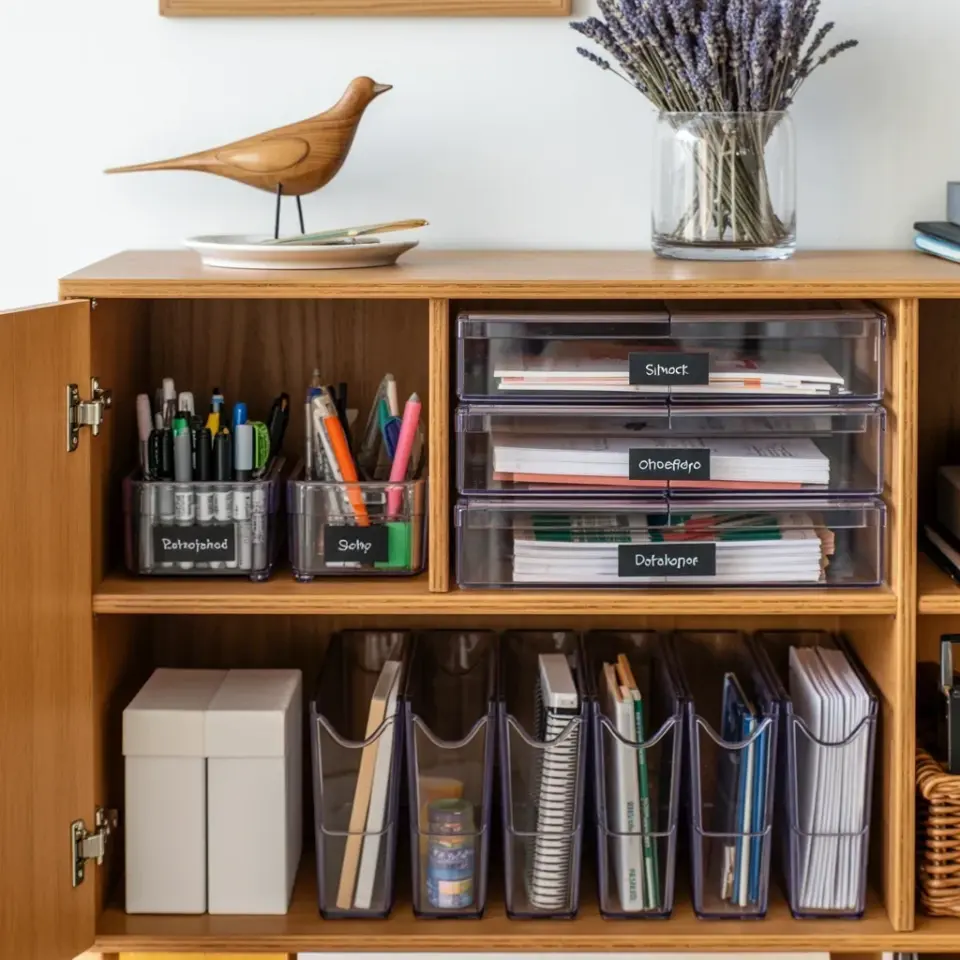
Don’t buy storage bins until you measure shelves first. I learned this the hard way after coming home with three cute woven baskets that were two inches too tall to slide under my bathroom sink. They sat on my bedroom floor for a month before I finally returned them. That wasted trip and the store credit reminded me that measuring first is not just for serious organizers. It is the single step that separates a tidy system from a collection of orphan containers. Whether you are tackling a pantry, a closet, or a garage wall, the rule is simple: measure the shelf before you even open a shopping tab.
How to measure the depth, height, and width of your shelves for storage bins
Grab a tape measure, a scrap of paper, and a pen. Do not rely on your memory or a quick glance. Write down three numbers for every shelf you plan to fill. First, the width from left to right. Second, the height from the shelf surface to the bottom of the shelf above it. Third, the depth from the front edge to the back wall.
I always add a half-inch buffer on the width and height. A bin that is exactly as wide as the shelf will jam against the side or the top. You need breathing room so you can slide the bin in and out without scraping paint or wood. For depth, leave at least an inch from the front edge. A bin that sticks out even slightly will catch your hip or get knocked off when you brush past.
One more detail: measure the inside of the shelf space, not the outside of the shelf itself. If you have a shelf that rests on brackets, measure the gap between the brackets, not the total length of the board. I once made this mistake with a closet system and ended up with bins that sat awkwardly around the bracket hardware.
Why standard bin sizes often don’t fit your actual shelves
Most storage bins sold online and in big box stores are designed to fit generic cube organizers or standard closet rods. But real homes have quirky dimensions. Your pantry shelf might be 14.25 inches deep, while most bins labeled as “medium” are 13 inches deep. That sounds like a win until you realize the bin is also 10 inches tall and your shelf height is only 9.75 inches.
The problem gets worse with wire shelving. The slats mean that a box with a flat bottom can wobble or tip if it doesn’t sit squarely on the wire. And those cute fabric bins with rigid side panels? They often bow out when filled, taking up more width than the listed dimensions. I have a set of gray canvas bins in my laundry room that are supposed to be 12 inches wide, but after stuffing them with towels, they bulge to nearly 13 inches. That bulge blocks the next bin from sliding into place.
Always assume that the listed dimensions on a product page are the maximum empty size. Once you load the bin, it can expand in ways you did not expect. That is why measuring the shelf and then subtracting a bit more than you think is a smarter approach.
Common shelf dimensions in real homes that trip up shoppers
Not every shelf is a perfect 12 inches deep. Here are some real-world measurements I have run into in apartments and older houses:
- Pantry shelves: often 14 to 16 inches deep, but height between shelves can be as tight as 8 inches for canned goods or as generous as 20 inches for cereal boxes.
- Kitchen cabinets: standard base cabinets are 24 inches deep, but the usable shelf depth is usually 20 to 22 inches because of the door hinge and face frame.
- Closet shelving: many reach-in closets use shelves that are 12 inches deep, but adjustable closet systems often have uneven spacing.
- Garage shelving: heavy-duty wire racks typically have a 48 inch width and 18 to 24 inch depth, but the crossbars can eat up usable space.
- Bookshelves: interior height varies wildly. I have a set of Billy bookcases that have 13 inches between shelves, but my older wooden shelves only have 11 inches.
The point is not to memorize these numbers. Instead, take them as a reminder that your shelf is unique. Do not assume a bin marked “standard size” will fit just because the package says so. Measure twice, buy once.
The measurement trick that saves you from returning bins
Here is the trick I use every single time. After you measure the shelf, take one more measurement: the diagonal of the shelf opening. That sounds weird, but it helps if you are buying bins with lids or bins that need to tilt in and out. For example, a deep pantry shelf might be 22 inches wide and 16 inches tall. A rectangular bin with a lid might be 14 inches wide and 15 inches tall. The bin will not fit if you try to slide it in flat because the lid catches the top. But if you tilt the bin, the diagonal clearance is what matters.
To get the diagonal, measure from the top left corner of the opening to the bottom right corner. Compare that to the bin’s diagonal (width squared plus height squared, then the square root, or just use an online calculator). If the bin diagonal is smaller than the shelf diagonal, you can angle it in. This trick saved me from buying a set of clear plastic bins for my laundry shelf that would have been impossible to remove once filled.
Another practical tip: take a photo of your shelf with the tape measure visible. When you are standing in the aisle of a store, you will not have to guess. I keep a note in my phone with the exact dimensions of every niche in my apartment. That list has saved me from countless impulse buys at the home goods store.
What to do when bins don’t fit perfectly
Sometimes you measure everything correctly and still end up with a bin that is half an inch too wide. Before you drive back to the store, try a small adjustment. If the bin is fabric, you can sometimes compress the sides by packing items differently. Even rigid plastic bins can flex slightly if you distribute weight evenly.
If the bin is too tall, check whether the shelf above is adjustable. Many closet systems and bookcases have movable shelf pins. Raise that shelf by one notch and suddenly the bin fits. I did this with a wire shelf in my hall closet and gained an extra inch of height. It took five minutes and a pair of pliers.
When none of those options work, repurpose the bin somewhere else. Move it to a room where the dimensions are more forgiving. I have a small stack of bins that started in my kitchen, then migrated to my office, and now live under my bed holding winter scarves. The money is not wasted if the bin eventually finds a home. But that is a reason to measure first, because a bin that bounces around from room to room is a sign you guessed wrong.
How to create a shopping list from your measurements
After you have written down every shelf dimension, turn that paper into a structured shopping list. List each shelf by location and space, for example “pantry – bottom shelf – 22W x 10H x 14D.” Then decide what kind of bin you want for that spot. For deep shelves, consider long, shallow bins that let you slide items out without digging. For narrow shelves, look for slim bins that stack.
I like to sort my list by bin width. That way I can see which shelves can share a single bin size. If three shelves in my pantry are all 14 inches wide, I can buy three identical bins and save on shipping or get a volume discount. Grouping dimensions also helps you avoid mixing styles. Nothing looks more chaotic than a shelf with four different bin colors and materials.
When you search online, filter by the exact dimensions you need. Many websites let you sort by depth or height. Do not trust the “size guide” photos that show a bin next to a candle or a coffee mug. Compare your numbers side by side with the product specs. If the specs say the bin is 12.6 inches wide and your shelf is 12.75 inches wide, that is too tight. Look for a bin that is at least an inch narrower.
A final checklist before clicking “add to cart”
You have your measurements, your list, and your preferred bin style. Run through this short checklist before you finalize any purchase:
- Is the bin at least 0.5 inches narrower than the shelf width? Yes? Good.
- Is the bin at least 0.5 inches shorter than the shelf height? Yes? Even better.
- Does the bin depth allow at least 1 inch of clearance from the front edge of the shelf? Yes? Perfect.
- Is the bin designed for the type of items you plan to store? Open bins for bulky items, lidded bins for loose clutter.
- Can you remove the bin easily when it is full? Imagine grabbing it with both hands. Will it slide out without catching?
If you answer yes to all five, go ahead and buy. If even one is a no, keep searching. I have been tempted to buy a bin that was exactly the right width but too tall, telling myself I would just leave the lid off. It never works. The lid sits crooked and the bin looks half-finished. Trust the numbers.
Organizing your home does not have to be expensive or frustrating. The biggest waste of money in the storage aisle is the bin you bring home that does not fit. Take ten minutes with a tape measure, write down the real dimensions, and shop with that list glued to your hand. Your shelves will thank you, and your wallet will stay a little fuller.
Next time you feel the urge to grab a pretty bin off the clearance rack, stop and ask yourself: did I measure first? If the answer is no, put the bin down and walk away. You can always come back after you know the numbers. Save this tip for your next organizing project and share it with a friend who is about to spend thirty dollars on a basket that will never fit their closet.
#homeorganization #organizingtips #decluttering #tidyhome #measurefirst
Leave a Comment