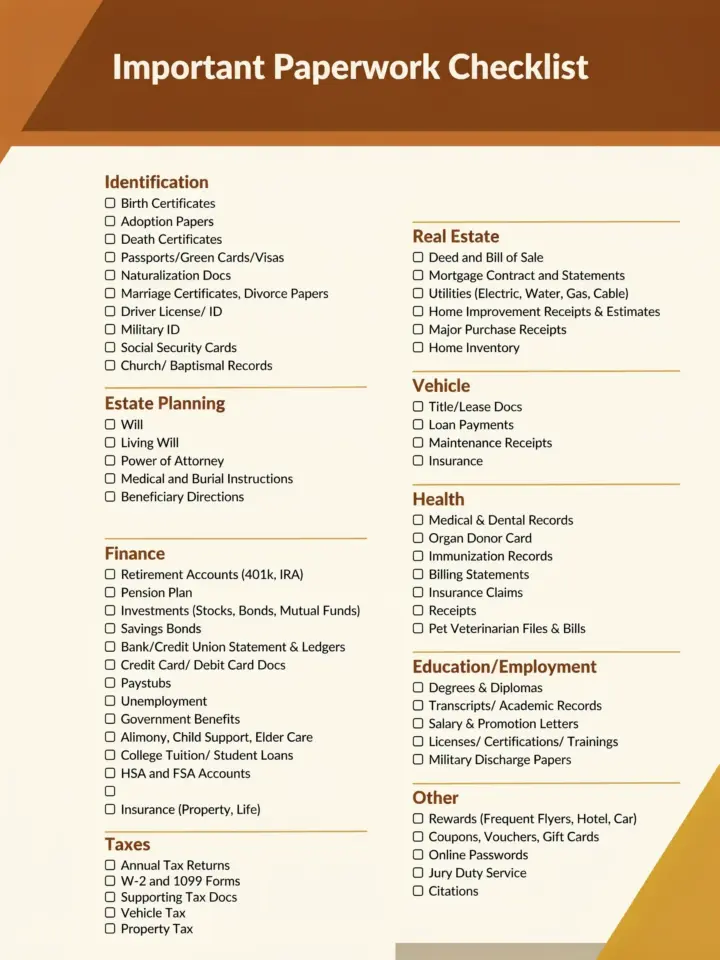
I used to shove every bill, receipt, and random piece of paper into a kitchen drawer. Then came the dreaded tax season panic, the frantic search for a passport before a trip, and the moment I realized I had no idea where my car title was. Sound familiar? That drawer is a black hole of anxiety. But I promise you, a simple home filing system changes everything. It is not about being a type A super organizer. It is about building a small, reliable habit that saves you hours of stress and hunting. This home filing system checklist covers over 60 important papers and documents you need to gather, so you can finally tame the paper tiger and find what you need in under a minute.
How to start organizing household paperwork from scratch
If you have zero systems in place right now, do not try to organize everything in one weekend. That leads to burnout and a bigger mess. Start by gathering every loose paper you can find. Pull them from the junk drawer, the counter, the nightstand, and those random piles on the floor.
Pile them all in one spot. Then, sort them into broad stacks. I use the floor for this, but a large table works too. Do not stop to file or read anything yet. Just sort by type: bills, medical, tax, school, warranties, and personal documents. This first pass takes maybe an hour, and it gives you a clear picture of what you are dealing with.
Once you see the piles, you can decide what to keep, what to shred, and what to file. Most paper clutter comes from holding onto things we do not need. Get a shredder for anything with personal info that you no longer require.
Essential categories for your home filing system checklist
A good household management system needs clear categories. I have six main folders in my file cabinet, and everything fits into one of them. You can use a simple accordion file or a plastic file box. The container does not matter as much as the logic behind it.
These are the broad buckets I recommend:
- Legal and Personal ID: Birth certificates, marriage licenses, passports, social security cards, and wills.
- Financial and Tax: Tax returns, bank statements, investment records, and pay stubs.
- Home and Property: Mortgage documents, property deeds, rental agreements, and home improvement receipts.
- Insurance: Home, auto, health, and life insurance policies with contact info.
- Medical: Immunization records, medical history, and prescription lists.
- Household and Maintenance: Appliance manuals, warranties, and vehicle maintenance logs.
These six categories cover about 95 percent of the paper that comes into a typical home. If you have a small business or run a side hustle, you may need a seventh folder for that.
Tax records and financial documents you need to keep
This is the area where people either keep everything or nothing. For tax records, the general rule is to keep your returns and supporting documents for at least three years. But I hold onto mine for seven years just to be safe. The IRS can audit you for up to six years if they suspect you underreported income by more than 25 percent.
For bank statements and pay stubs, keep them until you reconcile them with your annual tax return. After that, you can shred them. I keep the most recent pay stub of the year, and the rest goes. Investment statements are similar. Hold the quarterly ones until you get the annual summary, then pitch the quarters.
Keep any receipts related to home improvements, charitable donations, or large purchases. Those are
#homefilingsystem #paperorganization #householdmanagement #homesystems #decluttertips
Leave a Comment