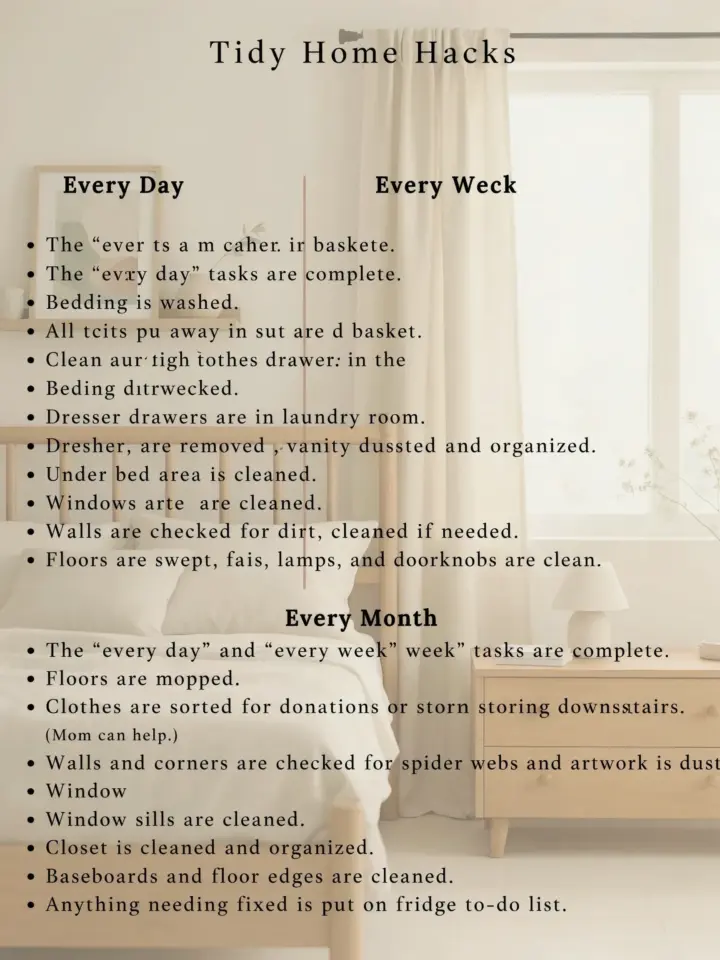
Getting kids to keep their room clean can feel like an endless negotiation. I have tried chore charts, reward systems, and pleading. What finally worked was a simple KidsCleanRoomChecklist that breaks things into daily, weekly, and monthly tasks. It turns the overwhelming mess into small, doable actions. This post rounds up my favorite ideas for building tidy habits without the power struggles.
A Daily 5 Minute Reset – The Non-Negotiable Routine
Every day needs a quick tidying session before bed. This is not a deep clean. It is a five minute sweep that stops the room from becoming a disaster zone. I call it the “reset” because it puts everything back in its place.
- Make the bed – even just pulling up the duvet counts.
- Put dirty clothes in the hamper (not on the floor).
- Throw away any wrappers or trash on the desk or nightstand.
- Return books and toys to their designated bins or shelves.
Doing this every evening teaches consistency. My kids know that screen time doesn’t happen until the reset is done. No exceptions.
Weekly Deep Dives – Rotating Chores That Actually Matter
Once a week you need to go deeper. But don’t try to do everything every Saturday. Rotate the bigger tasks so the child stays interested and the room stays fresh. I assign one weekly chore per week and swap it the next.
- Week one: Dust all surfaces including the top of the dresser.
- Week two: Vacuum the floor and under the bed.
- Week three: Wipe down the baseboards and door handles.
- Week four: Organize one drawer or one shelf that gets messy.
This rotation keeps the room from getting gross while also teaching kids that cleaning is more than just picking up toys. It also prevents boredom because the task changes every seven days.
Monthly Missions – The Overlooked Spots
Some things only need attention once a month. These are the spots we all forget until they cause problems. I schedule a monthly mission on the first Saturday and make it a family event.
- Wash the comforter and pillowcases (check the labels first).
- Wipe inside the closet doors and the light switch plates.
- Go through the toy box or book shelf and donate or toss broken items.
- Vacuum the mattress top and edges (keeps dust mites away).
I found that listing these monthly tasks on the CleaningChecklist prevents them from slipping. My kids actually look forward to the donation part because it makes space for something new.
How to Track Progress Without Nagging – Visual Tools That Work
A checklist only helps if you actually use it. I learned the hard way that writing tasks on a whiteboard or a printed sheet is not enough. The secret is making the tracking visible and satisfying.
I use a laminated page with three columns: daily, weekly, monthly. Each column has small boxes for each task. The child checks off a box with a dry erase marker. When the whole column is full they get a small reward. This simple system is part of my TidyHomeHacks that actually stick because the visual progress motivates them.
Another idea is a marble jar. For every complete set of daily tasks for a week, drop a marble into a jar. When the jar is full they choose a fun outing or a new book. This turns cleaning into a game without needing constant reminders from you.
Motivation That Sticks – Rewards and Gamification for Real Kids
Rewards work best when they are immediate and small. Big prizes like a new video game feel too far away for younger kids. I keep our reward system simple and tied directly to the checklist.
- Daily completion: 15 extra minutes of reading or screen time.
- Weekly completion: choose the dinner menu for one night.
#KidsCleanRoomChecklist #TidyHomeHacks #CleaningChecklist #BedroomOrganization #ParentingTips
Leave a Comment